
Creative and Embodied Group Supervision
Online clinical group supervision for therapists, allied health and medical clinicians across Australia. Small closed group, creative and embodied process.

Content analysis revealed that (barriers to clinical supervision 'CS') were predominantly clustered around structural impediments (operational workload/staffing issues), CS-specific factors (lack of appropriate supervisors) and the institutional context in which CS provision was located (workplace culture, fear of judgement, management concerns).
Research reveals that barriers to engagement in clinical supervision for healthcare workers can be summarised under four key areas:
Lack of time, timetabling challenges, the pressure of busy work environments and high caseloads, and concerns around budget constraints are some of the key operational barriers to clinical supervision as outlined in the literature.
Whilst there is growing recognition for the value of clinical supervision for healthcare teams, there is a lack of sufficiently trained and skilled supervisors. Given that group supervision is one of the most efficient modes of supervision delivery, supervisors also need to be proficient group facilitators.
Whilst clinical supervision is well known within the psychosocial workforce, it appears to be a poorly understood concept in healthcare organisations.
Specifically the literature identifies the following misunderstandings:
One of the major resisting forces was the lack of knowledge of clinical supervision. Staff members were also suspicious about clinical supervision being linked with line management.
The literature supports the view that line management supervision and clinical supervision need to be separate entities in order for nurses to accept and agree to clinical supervision.
Tempo's Helping Professionals Interview Series highlights the often-challenging cultures that exist in healthcare organisations. An analysis of clinical supervision in medical settings confirms that organisational structures, and team and worker attitudes, can impede engagement and openness to participation in this type of support. This is exacerbated by clinicians' tendencies to put others first.
It is clear that there is confusion regarding the content, purpose and value of clinical supervision, and that workplace politics and culture, are impacting its accessibility, engagement and participation within healthcare settings.
How can workplaces create safe-enough spaces for clinical supervision so that staff understand its purpose, what is involved, and feel a sense of certainty and trust that it will be a safe and confidential space?
Here is a list of recommendations from the research:
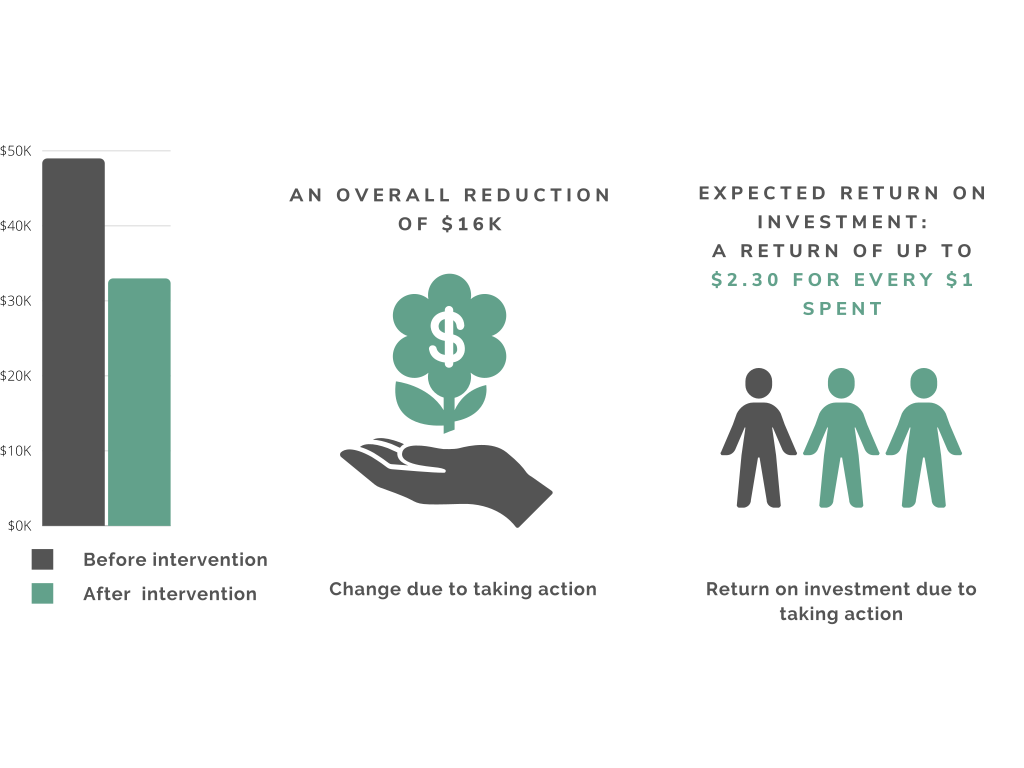
Mental health conditions present substantial costs to organisations. However, through the successful implementation of an effective action to create a mentally healthy workplace, organisations, on average, can expect a positive return on investment (ROI) of 2.3. That is, for every dollar spent on successfully implementing an appropriate action, there is on average $2.30 in benefits to be gained by the organisation.
Taking resources of time and money out of any budget can be a tall order for any service.
However, with recent statistics confirming that 84% of healthcare workers experienced burnout in 2022, and increasingly high levels of worker distress and anticipated withdrawal from the workforce, it is imperative that the mental health of clinicians is supported in the workplace.
The cost to healthcare services due to absenteeism, presenteeism and compensation claims can be reduced by thousands if you have a mental health plan and offer effective support to staff.
See the information summarised in the infographic below:
In addition to the monetary return on investment, there is increasing interest in the concept of 'Quality Improvement Return of Investment'; that is, "any value that is seen to be of importance, utility, or usefulness".
Thusini, Milenova, Nahabedian & Grey outline the health and social care value to organisations in terms of:
Clinical supervision can be an important aspect to a comprehensive plan of support for healthcare staff that delivers financial return on investment and a quality return on value that supports staff and ultimately service users.
Creative and Embodied Group Supervision
Online clinical group supervision for therapists, allied health and medical clinicians across Australia. Small closed group, creative and embodied process.

Hobart Group Supervision Collective
A 6-month, in-person closed clinical supervision group for health professionals at the South Hobart Garden Studio. Start
Header image: Jason Goodman