
Hobart Group Supervision Collective
A 6-month, in-person closed clinical supervision group for health professionals at the South Hobart Garden Studio. Start

The stress itself will kill you faster than the stressor will, unless you do something to complete the stress response cycle.
The recent blog, 'How do we respond to stress?', highlighted the impacts of the accumulation of stress in our bodies. Let's unpack this some more to find ways that we can support ourselves towards better health.
As described in this previous blog, stress involves a threat, real or perceived, to our physiological or psychological wellbeing.
A stressor is the event that causes this stress.
For example:
A stressor can be a one-off incident (as in the car accident) or can accumulate over time (as in the relationship break down).
Some examples of stressors that can accumulate over time are:
"Emotions are allostatic processes that transform the relationship between the environment and the desired bodily states into behaviour supporting homeostasis and well-being" (Nummenmaa, 2022).
What does this mean?
We can often be scared of challenging emotions. Certainly in Western society many of us have been socialised to turn away from difficult feelings.
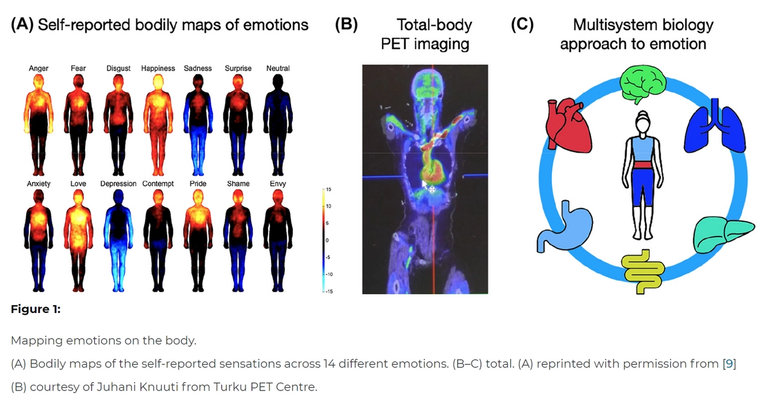
However, we know (see research regarding the body maps below) that we need to allow our emotions and stress states need to be felt and expressed in support, in order for them to be transformed.
We have all had an experience of working hard to meet a deadline, dreaming of the triumphant moment of completion, only to find ourselves immediately collapsed in a heap, incredibly unwell.
Our stress response is designed to protect us from immediate danger. In this modern, Western society we are often in prolonged states of chronic stress for days, months or even years.
The impacts of stress accumulate throughout our bodies in an intricate cascade that effect our hormonal health, digestion, mental health, and immune, cardiocasvascular and musculoskeletal systems.
How can we reduce these impacts? See point 4.
The work of Peter Levine has shown us how mammals naturally complete the stress response cycle.
You can see in the video below, an impala going through different nervous system responses as it faces immanent death from a leopard:
We need to find our own ways to release stress.
See below and consider which approaches you already use and which you might like to try:
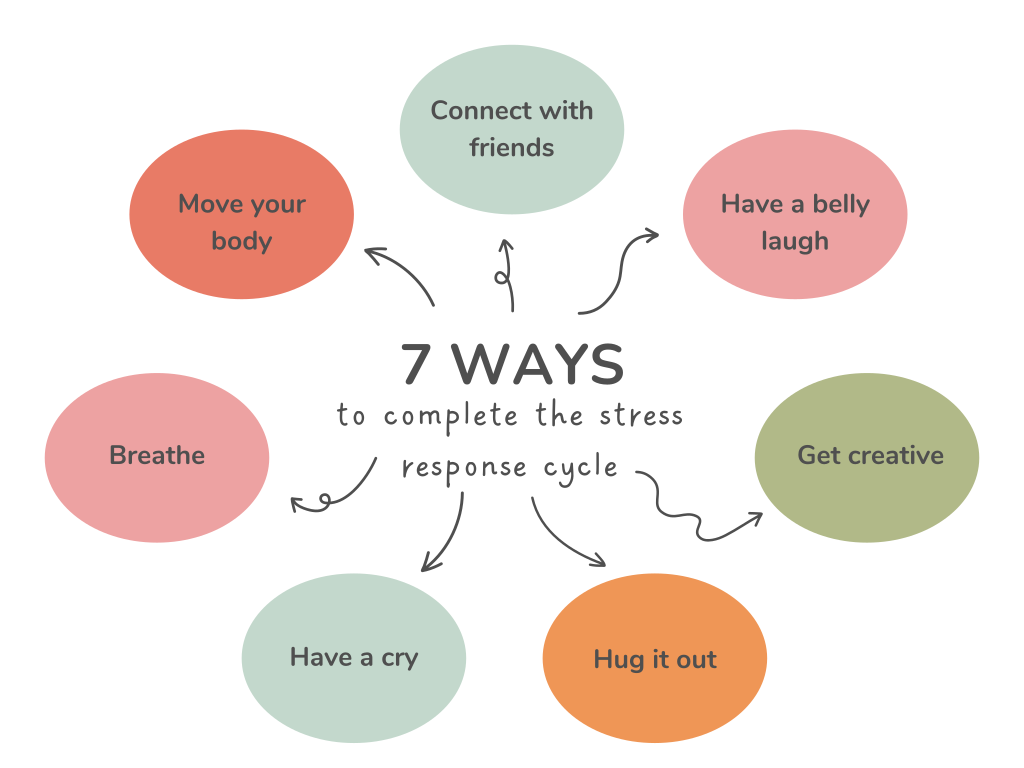
Which of these do you already use?
Which might you like to try this week? Feel free to let me know your ideas here.
Emotions are tunnels. If you go all the way through them, you get to the light at the end.
Hobart Group Supervision Collective
A 6-month, in-person closed clinical supervision group for health professionals at the South Hobart Garden Studio. Start

Creative and Embodied Group Supervision
Online clinical group supervision for therapists, allied health and medical clinicians across Australia. Small closed group, creative and embodied process.
Header image: Ahmad Odeh